ORGANIZE BY ROOM
Simple systems for clothing, bedding, shoes, and the small spaces around your bed.
Start with one useful change
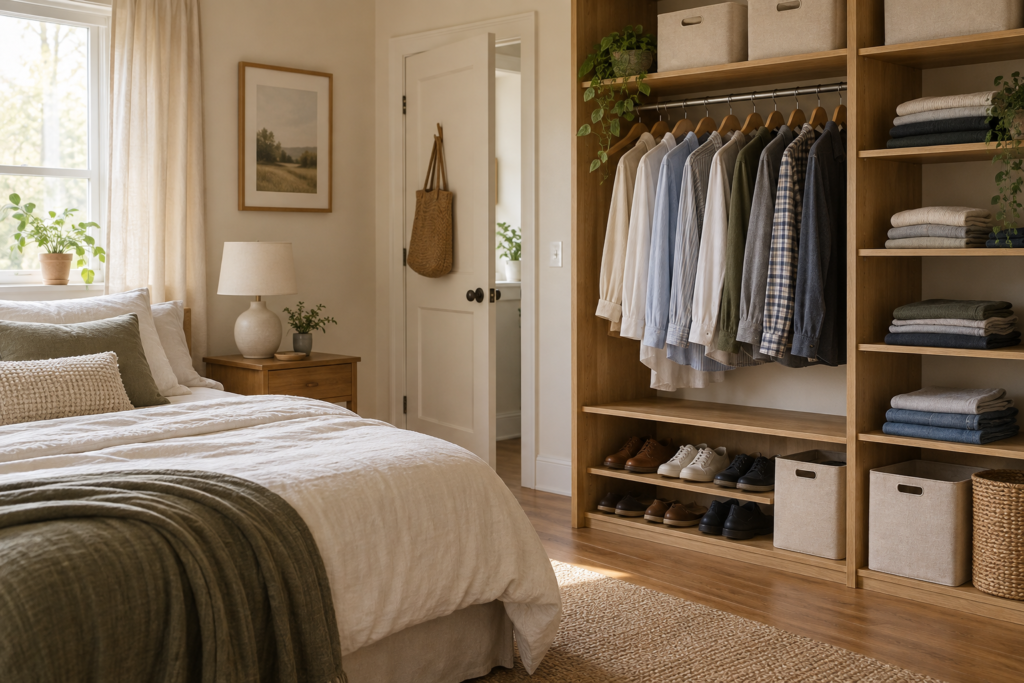
Assign closet space by frequency of use: everyday clothing within easy reach, occasional items higher or farther back, and heavy storage low down.
What to measure before you buy
- The usable internal width, depth, and height—not just the outside of the furniture.
- The space needed for doors, handles, drawers, and your hand to move.
- Any obstacles, moisture conditions, and mounting or weight restrictions.
Choose your first project
Small closet zones
Put frequently worn clothes within reach and make each group easy to return.
Closet organization ideas
Compare changes for hanging space, folded clothes and everyday access.
Capsule wardrobe planning
Build a working selection around the clothes your actual week requires.
Seasonal clothing and vacuum bags
Check garment care and the complete storage route before choosing compression.
Jewelry storage
Separate chains, pairs and daily pieces rather than mixing them in one crowded tray.
Laundry sorting
Organize the return-to-clean cycle around care labels and real wash routines.
Explore closet & bedroom guides
Find step-by-step ideas and practical storage advice in our closet & bedroom guide library.
Make the system easy to maintain
Choose a layout that is understandable without a long explanation. Keep daily items easy to reach, use plain-language labels where contents are hidden, and review the arrangement after an ordinary week. If returning an item takes too many steps, simplify the routine before adding more storage.
Common questions
Where should I start with an overcrowded closet?
Separate the clothes you use regularly from occasional items, then check whether the daily group is easy to see, remove and return. Start with one hanging section or drawer. Change the layout around that group before buying a complete closet system.
Should I buy matching organizers first?
No. Sort what belongs in the space, measure the usable area, and test the layout with existing containers first. Matching products are optional; fit and easy access matter more.
Will products have the same size in every country?
Not necessarily. Check the exact local listing, model, dimensions, material, and mounting instructions. Use centimetres or inches consistently when measuring and convert carefully if the listing uses another unit.
Latest published guides in this room
Browse the current articles below. New guides appear here when they are published.
Ironing Board Storage: Plan Folding and Retrieval Space
Find an ironing board storage position by measuring the folded frame, retrieval path and opening space. Compare hooks and floor storage carefully.
Laundry Basket: Check Carrying, Capacity and Doorways
Choose a laundry basket by the route you carry it, handle access and realistic filled capacity. Check storage and cleaning instructions.
Laundry Sorting: Build a System Around Care Labels
Create a simple laundry sorting system around garment care and actual wash routines. Keep special-care items identifiable.
Closet Lighting: Plan Visibility Before Buying
Plan closet lighting around dark shelves, door movement and actual product instructions. Compare battery and installed options without guessing suitability.
Jewelry Storage: Separate Chains, Pairs and Daily Pieces
Plan jewelry storage around chain separation, paired pieces and daily access. Check material-specific care before choosing a holder.
Capsule Wardrobe: Build Around Your Actual Week
Build a capsule wardrobe around real activities, laundry frequency and outfit combinations. Start with clothes you own rather than a fixed item count.
Closet Organization Ideas: Choose Storage That Fits Your Clothes
Compare practical closet organization ideas for hanging clothes, folded stacks, shoes and accessories, with checks for fit, access and easy laundry return.
Vacuum Storage Bags: Check Clothes Before Compressing
Check garment care, bag instructions and retrieval needs before compressing clothes. Vacuum packing is not suitable for every textile.
Small Closet Organization: A Practical Guide
Assign closet space by frequency of use: everyday clothing within easy reach, occasional items higher or farther back, and heavy storage low down.